
How to Fix Drainage Problems in Your Yard: Landscaping Solutions for Montgomery County Homes
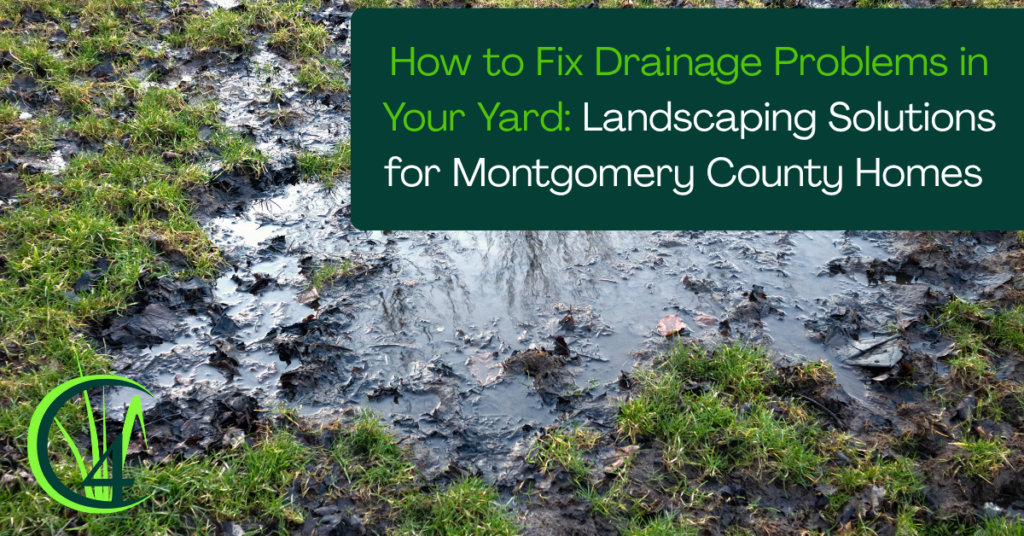
Standing water in your yard isn’t just an inconvenience. When water has nowhere to go, it can damage your landscaping, wash away soil, create muddy areas, and potentially cause problems around your home’s foundation.
If you’ve noticed puddles that stick around long after a storm, patches of grass that never seem to dry out, or mulch washing into your driveway every time it rains, there’s probably an underlying drainage issue that needs attention.
For homeowners in Montgomery County, TX, drainage problems are especially important to address. Between heavy Texas rainstorms, varying soil conditions, and the way properties are graded, managing water is an important part of maintaining a functional landscape.
The good news is that most yard drainage problems have solutions. The key is understanding where the water is coming from, why it isn’t draining properly, and what needs to change to keep it moving in the right direction.
What Causes Yard Drainage Problems in Montgomery County, TX?
Drainage issues are among the most common landscaping problems local homeowners face. Before choosing a drainage solution, though, you need to understand what’s causing the problem. Water collecting in your yard is usually a symptom of something else happening beneath the surface or across the property.
Some of the most common causes include:
- Poor grading: If your yard slopes toward your home or has low spots, rainwater can collect instead of flowing away.
- Compacted or clay-heavy soil: Certain soil types absorb water slowly, especially when the ground is already saturated.
- Heavy rainfall: Montgomery County can experience intense rainstorms that overwhelm existing drainage systems.
- Improper runoff: Water from roofs, driveways, patios, and neighboring properties can collect in areas that weren’t designed to handle it.
- Inadequate drainage systems: Missing, damaged, or improperly installed drainage features can leave water with nowhere to go.
The first step toward fixing the problem is identifying how water moves across your property and where that movement is being interrupted.
Signs Your Yard Has a Drainage Problem
Some drainage problems are obvious. Others develop gradually, causing damage before homeowners realize there’s an issue.
Common warning signs include:
- Standing water that remains long after rainfall
- Soggy grass or consistently muddy areas
- Mulch, gravel, or topsoil washing away
- Exposed roots or erosion around landscape beds
- Water collecting near your home’s foundation
- Plants struggling in areas where the soil stays saturated
Pay attention to where these problems occur, especially after a heavy rain.
A low spot in the backyard may require a different solution than water collecting against your home’s foundation. Understanding the location and severity of the problem helps determine the best approach.
4 Yard Drainage Problems Solutions That Actually Work
There’s no single drainage solution that works for every property. The right approach depends on your yard’s slope, soil conditions, existing landscaping, and where excess water needs to go.
Here are four common landscaping solutions for improving drainage in Montgomery County yards.
1. Correcting Yard Grading and Slope
One of the most effective ways to address drainage problems is to correct how water flows across the property.
Grading involves adjusting the slope of the ground so rainwater moves away from your home and toward an appropriate drainage outlet.
If your yard has low areas where water consistently collects, regrading may help eliminate those spots and improve overall drainage.
Proper grading is especially important around foundations, patios, walkways, and outdoor living spaces.
However, moving soil without understanding the property’s drainage patterns can create new problems elsewhere. That’s why grading should be planned carefully, particularly when neighboring properties or existing landscape features are involved.
2. Installing French Drains and Catch Basins
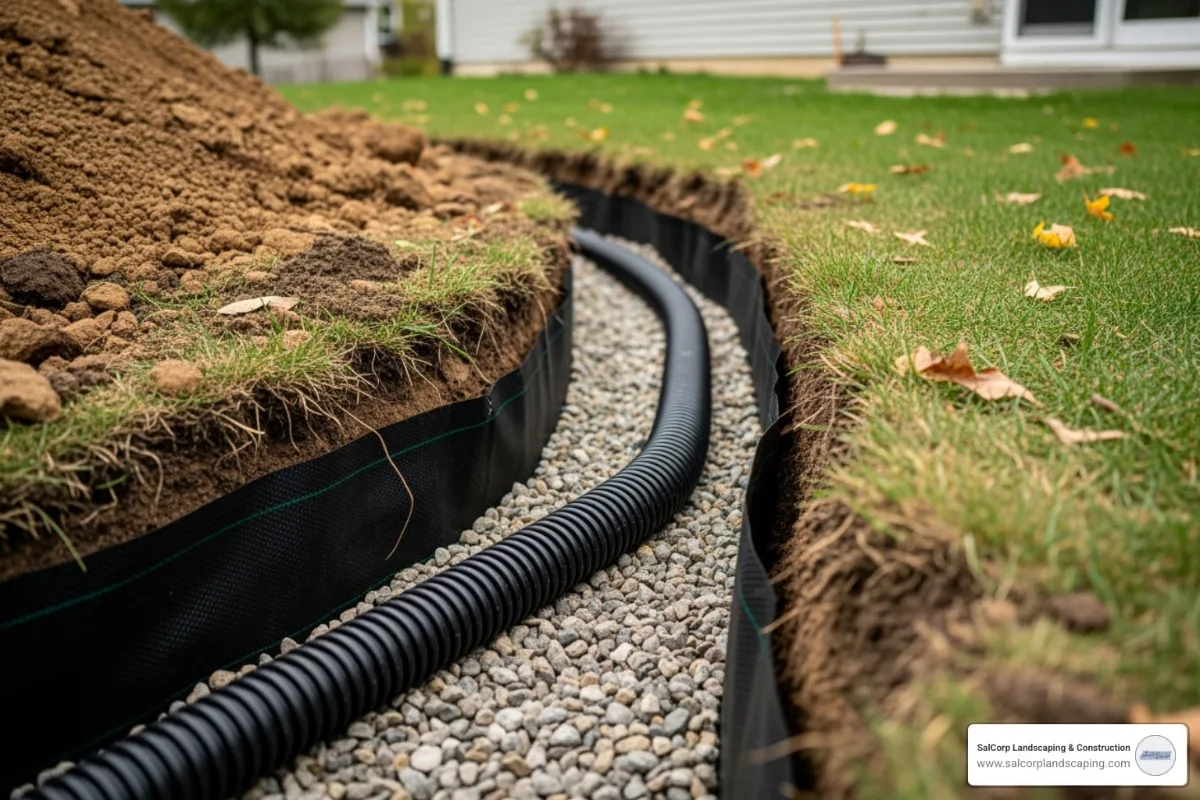
When grading alone isn’t enough, an underground drainage system may be necessary.
Two common options are French drains and catch basins.
French drains use perforated pipes surrounded by gravel to collect water from saturated soil and redirect it toward an appropriate discharge location. They’re often useful in areas where excess moisture builds up below the surface.
Catch basins collect surface water through a grated opening and move it through underground piping. These systems can be effective in low spots, near patios, or in areas where runoff collects during heavy rainfall.
Although both systems help manage excess water, they serve different purposes.
Choosing the right drainage system depends on whether you’re dealing with surface runoff, saturated soil, or a combination of both.
Proper placement, slope, and discharge planning are essential for long-term performance.
3. Incorporating Hardscaping to Manage Drainage and Erosion
Sometimes, the best drainage solution can also improve the appearance and functionality of your yard.
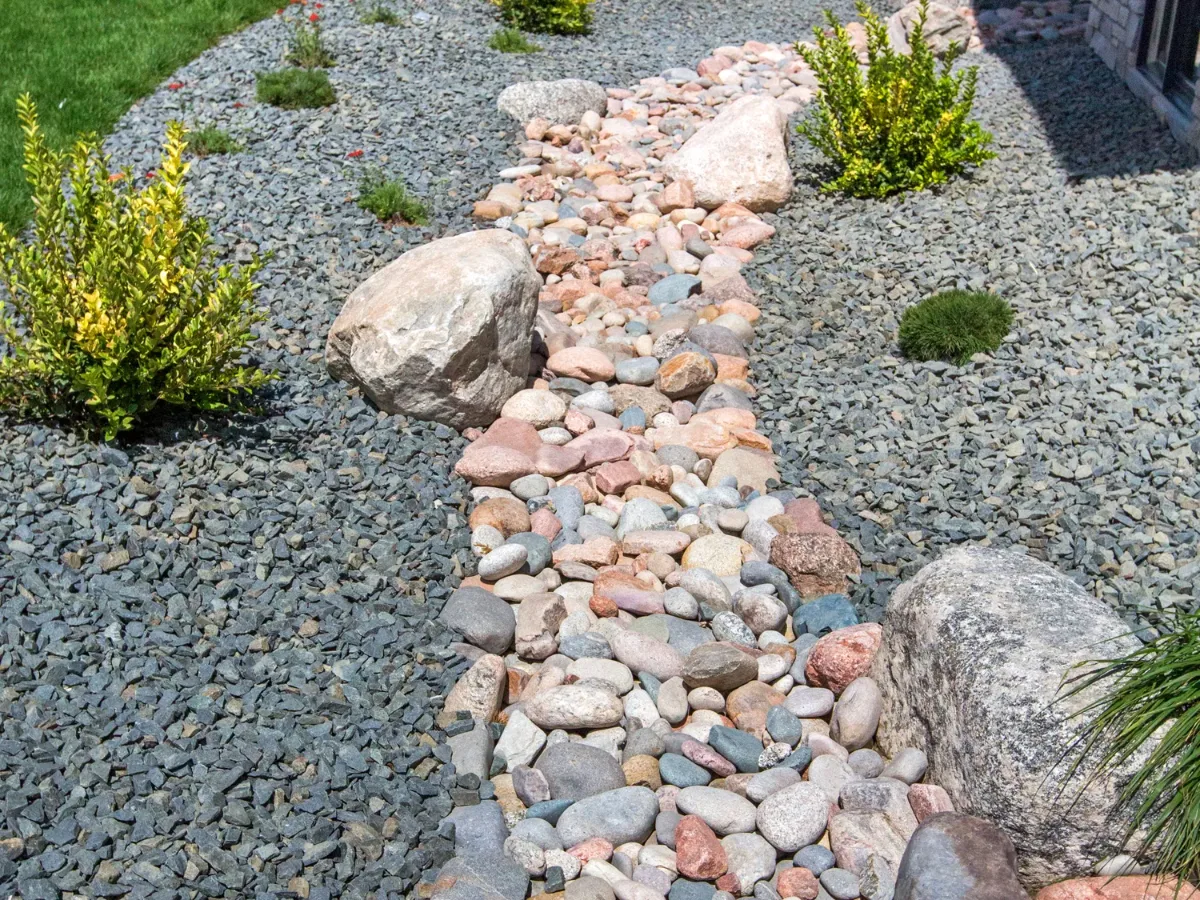
Hardscaping features such as dry creek beds, retaining walls, and properly designed patios can play an important role in managing water movement.
For example:
- Dry creek beds: Stone-lined channels can help guide surface runoff through the landscape while creating a natural-looking design feature.
- Retaining walls: Properly engineered retaining walls can stabilize slopes and help control erosion. They also require drainage provisions to prevent water pressure from building up behind the wall.
- Patios and walkways: Proper grading and drainage planning around paved surfaces can help prevent water from collecting against your home or washing into surrounding landscape beds.
These features can be especially valuable for properties with uneven terrain, sloped yards, or areas where water consistently follows the same path.
At C4 Landscape & Design, our professional hardscaping services incorporate functional features like creek beds, retaining walls, and patios into the overall landscape design.
For homeowners who want to address drainage concerns without sacrificing curb appeal, decorative stone can be a practical addition to the landscape. Rock-lined drainage channels and dry creek beds can help direct runoff when properly graded, while creating a more natural, finished appearance. If you’re considering incorporating stone into your landscape, our guide to low-maintenance front yard landscaping with rocks offers additional ideas for using these materials in your outdoor design.
4. Managing Runoff With Rain Gardens and Strategic Planting
In some situations, plants and landscape beds can help manage excess rainwater.
A rain garden is a shallow, planted area designed to temporarily collect runoff and allow it to soak into the soil. According to Texas A&M AgriLife Extension’s guidance on rain gardens, these landscape features can help manage stormwater runoff when properly located and designed.
Plant selection matters, too. Certain grasses, shrubs, and native plants can help stabilize soil and reduce erosion, particularly along slopes or areas where water regularly moves across the landscape.
However, planting alone won’t correct significant grading issues or persistent standing water.
Rain gardens and strategic planting are most effective when soil conditions and drainage patterns support them, often as part of a larger landscape plan.
Improving Drainage as Part of a Complete Landscape Renovation
Sometimes, drainage problems are a sign that your yard needs more than one isolated improvement.
If you’re dealing with standing water, erosion, poorly positioned landscape beds, and an outdoor space that doesn’t function the way you want it to, a larger landscape renovation may be the better investment.
This approach allows drainage, grading, hardscaping, irrigation, and planting to be planned together rather than addressed one problem at a time.
For example, a backyard renovation might include correcting the slope, installing a functional creek bed, and building a patio with proper drainage around it.
Addressing these elements together helps create a finished landscape that’s both attractive and functional.
If you’re considering a larger project, our article on when to start a landscape project in Montgomery County, TX explains why fall can be a good time to begin planning and making improvements.
Why Professional Drainage Landscaping Matters for Texas Homes
When you’re dealing with persistent drainage problems, it’s tempting to look for a quick fix.
Maybe you’ve considered filling in a low spot with dirt, adding gravel to a muddy area, or installing a drain yourself.
While some minor issues can be addressed with simple improvements, more significant drainage problems require a better understanding of the property.
A professional landscape design takes several factors into account:
- Where the water originates and how it moves
- The property’s grading and elevation
- Soil conditions and absorption rates
- Existing drainage infrastructure
- Nearby structures, hardscapes, and landscape features
- Where excess water can safely discharge
Redirecting water without a proper plan can simply move the problem from one area of your yard to another. It can also create issues for neighboring properties.
That’s one reason investing in professional landscape design can be worthwhile, especially when drainage issues are affecting how you use your outdoor space.
A professional can evaluate the property as a whole and recommend solutions that work with the existing landscape rather than against it.
Whether you’re installing a new patio, redesigning your backyard, or correcting an ongoing drainage issue, proper planning helps protect your investment.
Fix Yard Drainage Problems With C4 Landscape & Design in Montgomery County, TX
Standing water, erosion, and poor drainage aren’t problems you want to ignore. Left unaddressed, they can continue to affect your lawn, landscape beds, outdoor living areas, and surrounding structures.
At C4 Landscape & Design, we create custom landscapes that balance appearance and functionality. From grading considerations and drainage planning to residential landscaping and hardscaping, we design outdoor spaces around the needs of each property.
Whether you’re dealing with persistent standing water or planning a complete landscape renovation, addressing drainage early can help prevent future problems and protect your investment.
Ready to make your yard work better? Contact C4 Landscape & Design to discuss your property and explore professional drainage landscaping solutions in Montgomery County, TX.