
Landscape Lighting Ideas to Boost Curb Appeal After Dark in Montgomery County, TX
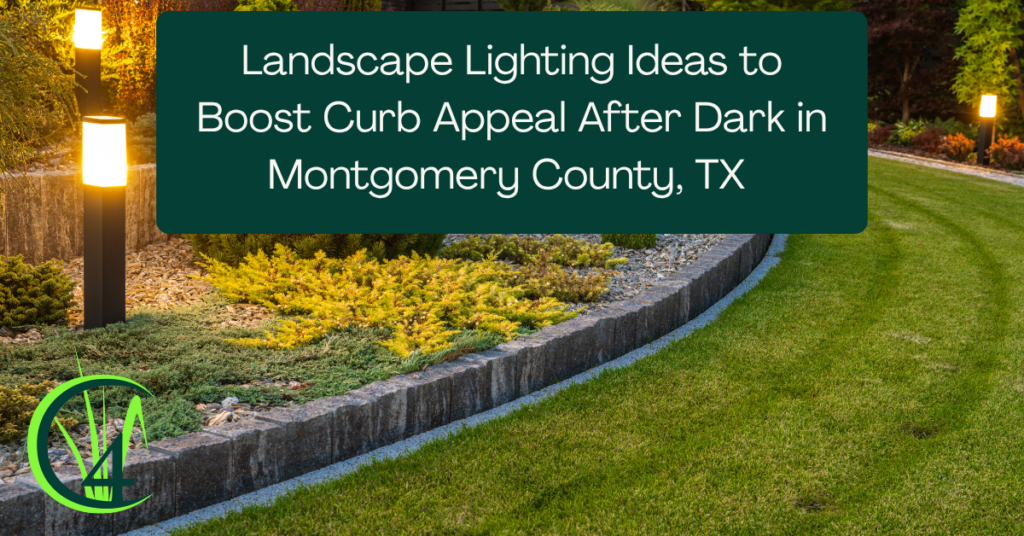
You put a lot of thought into how your home looks during the day. From the landscaping and architectural details to the walkways and entryway, every element contributes to your home’s curb appeal.
But what happens when the sun goes down?
Without the right lighting, many of those features disappear into the darkness. Your landscaping becomes less noticeable, architectural details get lost, and your home’s exterior doesn’t make quite the same impression.
That’s where professionally designed landscape lighting can make a difference.
For homeowners in Montgomery County, TX, outdoor lighting is an opportunity to highlight the features you’ve already invested in while creating a more welcoming, polished exterior.
Whether you’re planning a complete landscape renovation or looking for ways to elevate your home’s exterior, these landscape lighting ideas can help you make the most of your property after dark.
How Does Outdoor Lighting Improve Curb Appeal?
Curb appeal plays a significant role in how people perceive a home. According to the National Association of REALTORS® 2023 Remodeling Impact Report: Outdoor Features, 97% of REALTORS® believe curb appeal is important in attracting potential buyers.
But improving your home’s exterior isn’t just about resale value. The same report gave landscape lighting a perfect Joy Score of 10 out of 10, placing it among the outdoor improvements homeowners were most satisfied with after completion.
Good landscape lighting builds on both of those benefits, enhancing your home’s appearance while making your outdoor spaces more enjoyable after dark.
- Highlight architectural features: Draw attention to columns, stonework, rooflines, and other details that give your home character.
- Showcase your landscaping: Keep mature trees, ornamental plants, and professionally designed garden beds visible after dark.
- Create a welcoming entrance: Make your front walkway and entryway feel inviting without overwhelming the space with bright lights.
- Improve nighttime visibility: Illuminate steps, pathways, and transitions between outdoor spaces.
- Add depth and dimension: Use light and shadow to create visual interest instead of leaving the entire property evenly illuminated.
As we’ve covered in our guide to professional landscape lighting in Montgomery County, TX, the benefits go beyond appearance. A well-designed lighting system can also improve visibility, create a more welcoming atmosphere, and help homeowners get more enjoyment from their outdoor spaces. The goal isn’t to make your home as bright as possible. It’s to use lighting intentionally, drawing attention to the right features while creating a balanced appearance.
Professional Landscape Lighting Ideas
Every property is different, and the right lighting design depends on your home’s architecture, landscaping, and layout. However, a few strategic lighting techniques can make a significant difference in how your property looks after dark.
1. Highlight Mature Trees With Uplighting
Mature trees are often some of the most impressive features of a residential landscape. During the day, they provide shade, structure, and visual interest. At night, they can become focal points with the right lighting.
Uplighting involves positioning fixtures near the base of a tree and directing light upward to illuminate its trunk, branches, or canopy. This technique works particularly well with the mature oaks and other established trees found throughout Montgomery County.
Rather than illuminating every tree on the property, focus on a few prominent specimens that add depth and character to the landscape.
2. Accentuate Architectural Features and Entryways
Your home’s architecture should play a major role in your landscape lighting design. Whether your property features natural stone, brick, columns, or distinctive entryway details, carefully positioned lighting can emphasize the elements that make your home stand out.
A few common techniques include:
- Uplighting: Directing light upward to highlight columns, stonework, or prominent exterior features.
- Grazing: Positioning light close to a textured surface to emphasize the natural shadows and details of brick or stone.
- Wall washing: Creating a softer, more even layer of light across a larger exterior wall.
These techniques can also help define your front entrance, creating a welcoming appearance without overwhelming the space with bright fixtures.
3. Incorporate Pathway and Hardscape Lighting
Walkways, driveways, and hardscape features play an important role in your home’s overall curb appeal, particularly on larger properties.
Strategically placed lighting can illuminate walking surfaces, highlight landscape borders, and accentuate features like retaining walls, steps, and decorative stonework.
Instead of installing fixtures in perfectly spaced rows, consider how the lighting interacts with the surrounding landscape. The goal is to improve visibility while maintaining a natural, cohesive appearance.
If you’re planning new walkways, retaining walls, or other structural improvements, incorporating lighting into your hardscape design from the beginning can help create a more polished finished space. As we explain in our article on how custom hardscapes add long-term value to Montgomery County homes, these features play an important role in both the appearance and functionality of your property.
4. Showcase Garden Beds and Landscape Features
If you’ve invested in professional landscaping, you should be able to enjoy those improvements after dark.
Landscape lighting can highlight the different heights, textures, and shapes within your garden beds, creating visual interest that isn’t possible with a single floodlight.
Consider using accent lighting around ornamental trees, larger shrubs, decorative boulders, landscape walls, or distinctive plants that serve as focal points.
The most effective designs use lighting selectively. Not every plant needs its own fixture. By highlighting certain features and allowing other areas to remain darker, you can create contrast and dimension throughout the landscape.
This approach is especially effective when lighting is incorporated into a larger residential landscape design rather than added as an afterthought.
Common Landscape Lighting Mistakes That Hurt Curb Appeal
More lighting doesn’t necessarily mean better curb appeal. In fact, poorly planned outdoor lighting can make an otherwise attractive property look unbalanced or overly bright.
Some of the most common mistakes include:
- Using too many fixtures: Illuminating every tree, shrub, and architectural feature eliminates the contrast that makes landscape lighting effective.
- Choosing excessively bright lights: Harsh lighting can wash out architectural details and create uncomfortable glare.
- Mixing different color temperatures: Inconsistent lighting colors can make an exterior look disconnected rather than cohesive.
- Ignoring fixture placement: Poorly positioned lights may shine into windows, create distracting shadows, or illuminate areas that don’t need attention.
- Overlooking future landscape growth: Trees and shrubs change over time, so fixture placement should account for how the landscape will mature.
Avoiding these mistakes starts with a thoughtful lighting plan. Beyond appearance, fixture quality, placement, wiring, and controls all influence how well a system performs over time. Our guide to landscape lighting design, cost, and value takes a closer look at these considerations and what homeowners should know before investing in a custom lighting system.
Why Professional Landscape Lighting Design Makes a Difference
There’s a significant difference between installing a few outdoor lights and developing a lighting plan that complements your entire property.
Professional landscape lighting design considers how your home’s architecture, plants, hardscaping, and outdoor spaces work together.
Fixture placement, beam angles, color temperature, and brightness all influence the finished appearance. So do practical considerations such as drainage, irrigation, maintenance access, and future plant growth.
For homeowners planning substantial landscape improvements, incorporating lighting into the design process allows these details to be addressed from the beginning.
It also creates opportunities to coordinate lighting with new planting beds, walkways, retaining walls, and other outdoor features.
As we discuss in our article on when to invest in professional landscape design, taking a comprehensive approach to outdoor improvements can help prevent costly mistakes and ensure that each element works together.
Choosing the right team is just as important as choosing the right lighting features. If you’re planning a larger exterior renovation, our guide on how to choose the right landscape designer in Montgomery County, TX covers what to look for when hiring a professional to bring your project together.
At C4 Landscape & Design, we incorporate custom lighting into larger landscape projects, creating outdoor environments where the lighting complements the overall design rather than competing with it.
Elevate Your Montgomery County Home With C4 Landscape & Design
Your home’s curb appeal shouldn’t disappear when the sun goes down.
From highlighting mature trees and architectural details to illuminating walkways and professionally designed garden beds, the right landscape lighting can completely change how your property looks and feels after dark.
For homeowners in Montgomery County, TX, thoughtful lighting design is an opportunity to make an existing landscape more impactful or take a new outdoor project to the next level.
At C4 Landscape & Design, we specialize in creating custom outdoor spaces that complement your home, your property, and the way you want to use them. Our team brings together landscape design, hardscaping, and professional landscape lighting to create cohesive exterior improvements.
If you’re considering a landscape renovation or comprehensive exterior upgrade, contact our team to discuss how professionally planned lighting can become part of your project.